
Raising Awareness on Ebola Prevention in North and South Kivu Through Relieve Human Pain (RHP)NGO's Initiatives

The Ebola outbreak in North and South Kivu provinces has posed a serious health threat to communities, especially indigenous groups who often face barriers to accessing timely information and healthcare. The virus spreads rapidly through contact with bodily fluids, making prevention measures critical to controlling the epidemic. Relieve Human Pain (RHP) NGO has stepped up to address this challenge by raising awareness and educating local populations on effective barrier measures to stop the spread of Ebola.
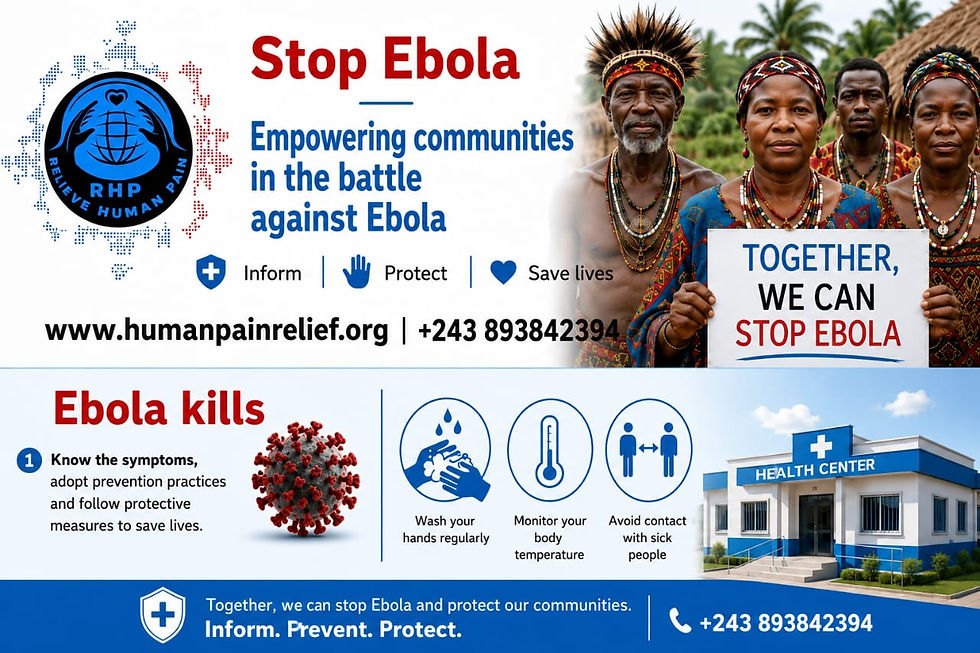
Understanding the Ebola Outbreak in North and South Kivu
North and South Kivu, located in the eastern part of the Democratic Republic of Congo, have experienced multiple Ebola outbreaks over recent years. The region’s dense forests, ongoing conflicts, and limited healthcare infrastructure complicate efforts to contain the virus. Ebola’s symptoms include fever, vomiting, diarrhea, and bleeding, and it can be fatal if untreated.
The virus spreads through direct contact with blood or bodily fluids of infected people or animals. Traditional burial practices and close community interactions increase transmission risks. Indigenous communities often live in remote areas with limited access to health services, making early detection and prevention more difficult.
The Role of Relieve Human Pain (RHP) NGO in Raising Awareness
Relieve Human Pain NGO focuses on educating communities about Ebola prevention, particularly targeting indigenous groups who are vulnerable due to isolation and lack of information. Their approach includes:
Community Engagement: The NGO works closely with local leaders and health workers to build trust and deliver culturally sensitive messages.
Educational Workshops: They organize sessions explaining how Ebola spreads and the importance of barrier measures like handwashing, avoiding contact with bodily fluids, and safe burial practices.
Distribution of Hygiene Kits: Providing soap, hand sanitizers, and protective equipment helps communities practice recommended hygiene.
Use of Local Languages: Information is shared in native languages to ensure clear understanding and acceptance.
Key Barrier Measures Promoted by the NGO
Relieve Human Pain NGO emphasizes practical steps that individuals and families can take to reduce Ebola transmission:
Frequent Handwashing: Using soap and clean water or hand sanitizer after contact with others or potentially contaminated surfaces.
Avoiding Physical Contact: Limiting handshakes, hugs, and other close contact, especially with sick individuals.
Safe Handling of the Sick: Encouraging families to seek medical help immediately and avoid direct contact with bodily fluids.
Safe Burial Practices: Training communities to conduct burials that prevent exposure to the virus, such as using protective gear and avoiding touching the body.
Reporting Symptoms Early: Educating people to recognize Ebola symptoms and report them to health authorities promptly.
Challenges in Reaching Indigenous Communities
Indigenous populations in North and South Kivu face unique obstacles:
Geographical Isolation: Remote villages are difficult to access, especially during rainy seasons.
Cultural Beliefs: Traditional practices sometimes conflict with recommended health measures.
Mistrust of Outsiders: Past conflicts and neglect have led to skepticism toward external organizations.
Limited Infrastructure: Poor roads and lack of communication tools hinder rapid information dissemination.
Relieve Human Pain NGO addresses these challenges by partnering with trusted local figures and adapting messages to respect cultural norms while promoting health.

Impact and Success Stories
The NGO’s efforts have led to measurable improvements:
Increased handwashing practices in target communities.
Reduction in traditional burial rituals that expose people to the virus.
More timely reporting of suspected Ebola cases.
Greater community participation in prevention campaigns.
For example, in a village near Beni, community leaders reported a drop in new Ebola cases after adopting the NGO’s recommended barrier measures. The collaboration between health workers and indigenous leaders proved essential in changing behaviors.
How You Can Support Ebola Prevention Efforts
Stopping Ebola requires collective action. Here are ways individuals and organizations can help:
Donate to NGOs like Relieve Human Pain to fund education and hygiene supplies.
Share accurate information about Ebola prevention within your networks.
Advocate for improved healthcare access in vulnerable regions.
Support local community leaders who promote safe practices.
Every effort counts in protecting lives and preventing further spread of Ebola.


Comments